





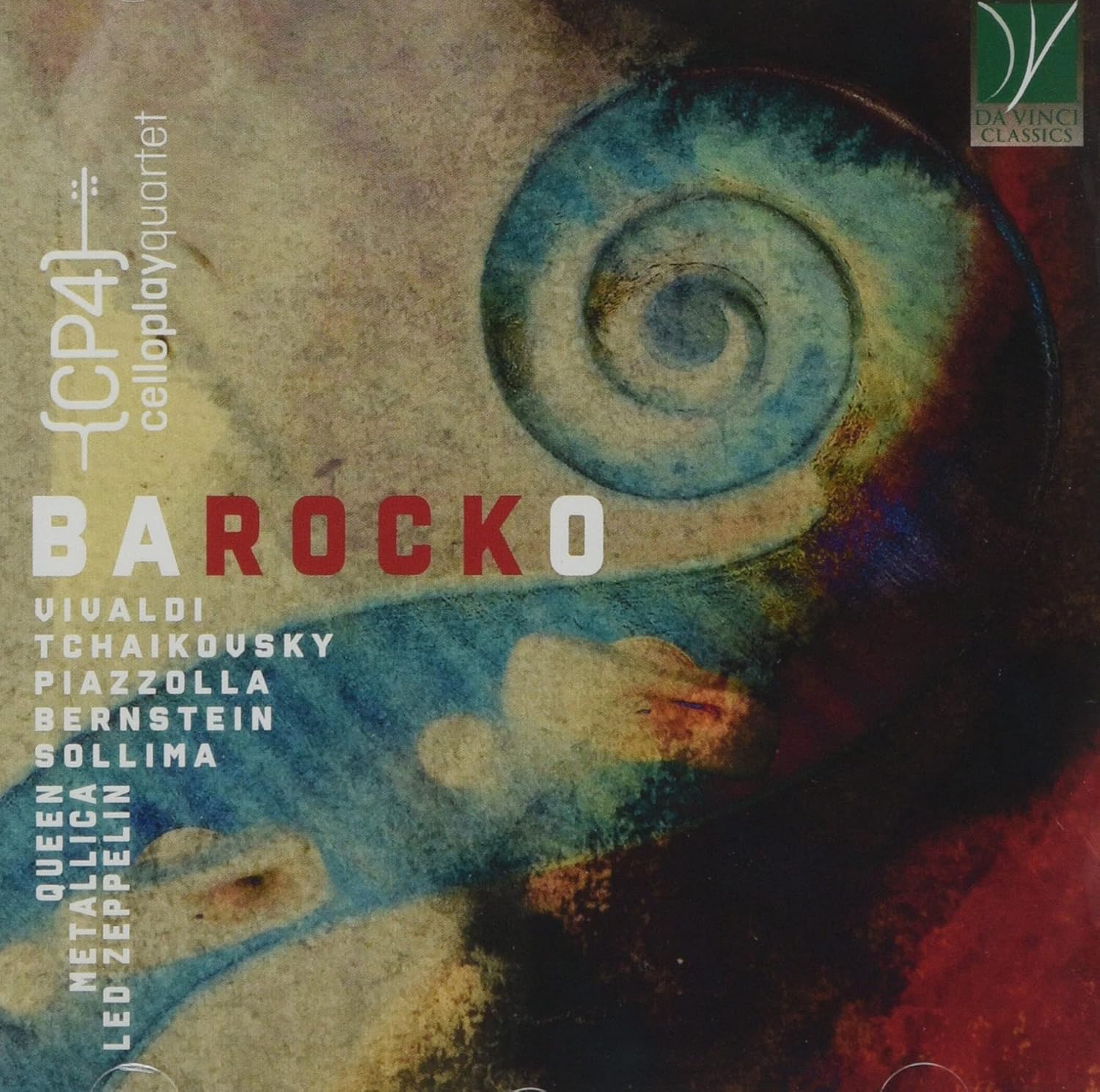
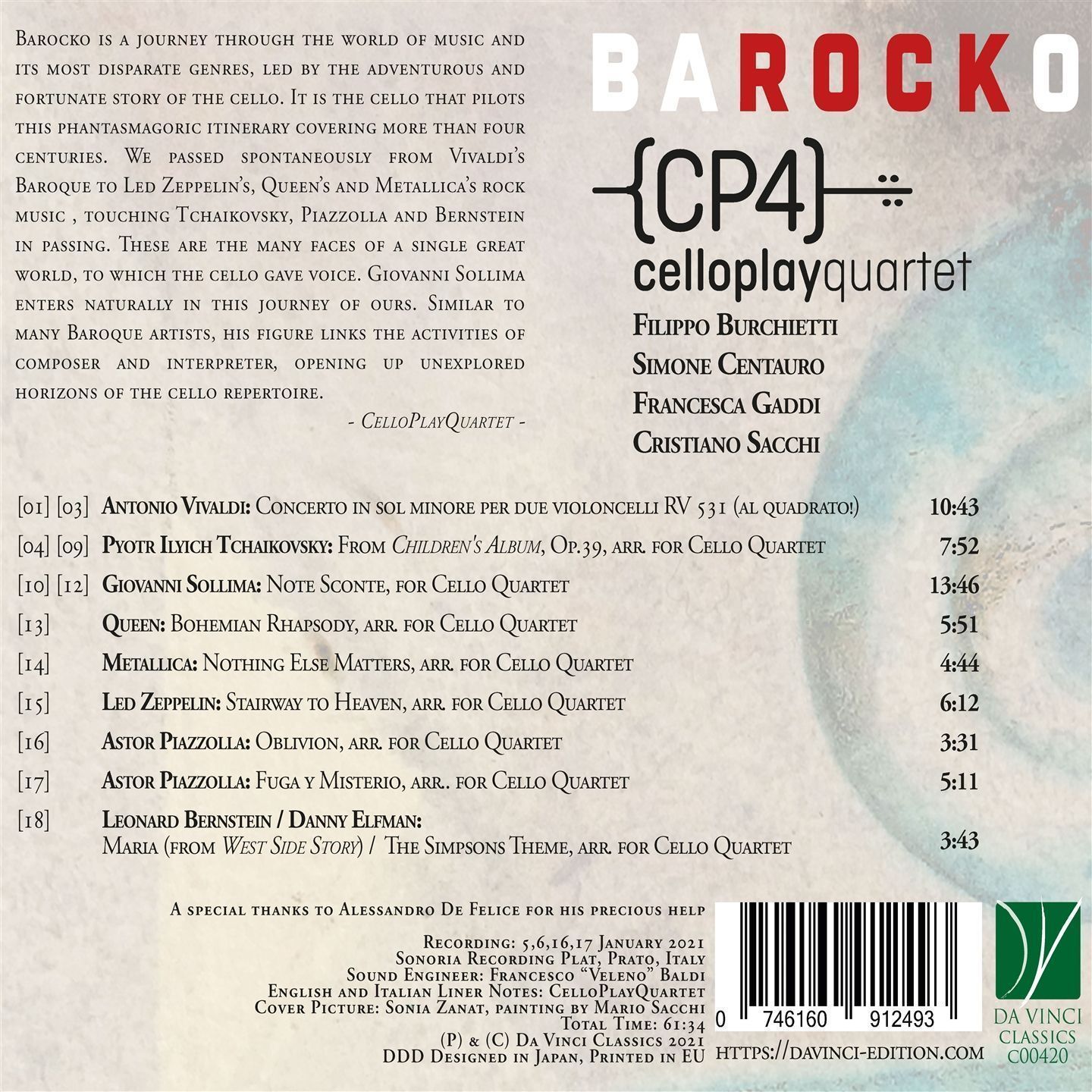
Barocko is a journey through the world of music and its most disparate genres, led by the adventurous and fortunate story of the cello. It is the cello that pilots this phantasmagoric itinerary covering more than four centuries.
The origins of the cello date back to the late 16th century. Initially it was employed only as a harmonic and rhythmical support for the principal part (constituting the so-called continuo). Later it acquired an increasing importance for both performers and composers. By the 18th century, it established its role as a protagonist of the musical world, thanks to extraordinary figures such as those of J. S. Bach (whose Suites are true milestones), A. Vivaldi (who composed dozens of solo works for it) and L. Boccherini, a great composer/interpreter who broadened the cello’s technique and repertoire.
The fact that these excellent composers were interested in the cello was also due to this instrument’s formidable possibilities as concerns sound (the cello is indeed a true miracle of artistic craftmanship and acoustic engineering) and range, which is the widest in the family of the string instruments.
Even though the original musical literature for cello quartet is very scanty, this ensemble is wonderfully suited for performing arrangements of pieces conceived for other sound media thanks to the instrument’s flexibility and characteristics.
The seeming heterogeneity of the pieces we chose actually follows a red thread. The itinerary begins with Vivaldi, one of the protagonists of the Baroque era, conceived (according to the German philosopher Walter Benjamin) as the cradle of modern culture due to its new worldview. It is in fact the moment when ancient certainties started to crumble, paving the way for modern relativism. The musical “seeds” planted in this historical period blossomed in the following centuries, in a variety of forms, and not only in the so-called “cultivated” repertoire.
We therefore passed spontaneously from Vivaldi’s Baroque to Led Zeppelin’s, Queen’s and Metallica’s rock music , touching Tchaikovsky, Piazzolla and Bernstein in passing. These are the many faces of a single great world, to which the cello gave voice. Giovanni Sollima enters naturally in this journey of ours. Similar to many Baroque artists, his figure links the activities of composer and interpreter, opening up unexplored horizons of the cello repertoire.
For this reason, Note Sconte is found at the heart of this journey. It was written by Sollima starting from notes and fragments of musical ideas which Beethoven did not employ in his finished works: this piece represents an ideal bridge between the so-called “cultivated” music and the music of our day.
Only logged in customers who have purchased this product may leave a review.
Reviews
There are no reviews yet.