










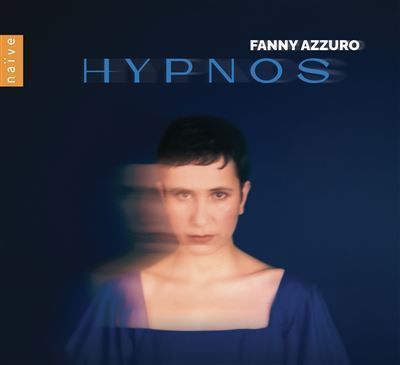
Remember: Hypnos, god of sleep in Greek mythology, is also the twin brother of Thanatos and the father of Morpheus. In the realm of dreams, at the edge of sleep, and right up to the breath over the graves, Hypnos watches. He soothes the mortal and guides them to the end of their path. This is the theme of pianist Fanny Azzuro’s new journey. Contrasting this plunge into the romantic night, which gradually absorbs all light, are writings tinged with hope. The nocturnes that make up the second volume of this double album evoke a dream on the path to resignation, perhaps, and to reconciliation, surely.
The premonition of death, mourning, and its funeral procession irrigate the first volume of this double album. Thanks to the modern piano, 19th-century composers explored new territories of the night. A heroic and comforting night in the writing of late Brahms, quite different in Chopin, whose so-called “Funeral” Sonata is conceived as a drama in four acts. Who is being buried? The composer or Poland, which he left in 1830? Phantasmagoric and macabre visions run through the Sonata, presaging in a prophetic manner what music would become half a century later. The violence reaches its peak with Schumann’s Nachtstücke. Visions of nightmares, rage, and battles to be fought… No hope in these pages of absolute darkness!
The performer mirrors the nocturnes of Chopin and Scriabin. The former evoke the world of bel canto, the art of Italian singing with nonchalant grace. By contrast, Scriabin’s Nocturnes Op. 5 seem to spring from an improvisation that enchants the evening air. As for the Russian composer’s Prelude and Nocturne for the Left Hand, it demands that the performer give the illusion of two hands without breaking a feeling of delicious abandon.
Fanny Azzuro presents a rarer repertoire here, starting with three of the six Soirées musicales Op. 6 by Clara Schumann. The romantic salon and the art of confession dominate these scores, which pay tribute to Chopin and, naturally, to Robert Schumann. Edvard Grieg’s Notturno then takes us from Romanticism to Impressionism; in this excerpt from the Lyric Pieces, the enchantingly charming melody becomes a delicate flutter. Finally, the pianist closes her recital with Ottorino Respighi’s Notturno. This early work by the Italian composer feels like the rustle of the wind in the cypresses of an Umbrian hill.
Fanny Azzuro (piano)
Reviews
There are no reviews yet.