





The sixteenth century was a period of deep crisis, but also of profound renewal in the spiritual domain. Luther’s Reformation ignited the spark of crisis, but in fact it merely set to fire the logs which had been piled up in the previous decades: corruption of the clergy, a deep intertwining of religious and secular power and ignorance were among the most evident problems. Luther’s initiatives broke the unity of the Church, and started a process leading, by the end of the century, to the crumbling of the Western Church into a number of different confessions. Probably Luther could not foresee so dramatic consequences as these; his original aim was undoubtedly that of reforming the Church, not of starting the Reformation.
Among the most evident symbols for Lutheranism, the Lied (later known as Chorale) is certainly prominent. For Luther, it was crucial that the faithful, regardless of their level of education, could be able to actively (and vocally) participate in the worship services; instead of the august (but complex, and archaic) tradition of Latin plainchant, Luther and his fellow Reformers provided their congregations with simple songs, whose easy lyrics and catchy tunes could be learned by rote even by the uneducated, by the children and by the “simple folk”. In a slightly different perspective, John Calvin opted for metrical psalm paraphrases in the local vernacular: while these were the work of some of the most important poets of the era, these paraphrases eschew complexity and literary refinement for its own sake, and are in turn enjoyable, understandable and easy to commit to memory.
Even among those who remained within Catholicism, the need was felt for a deeper involvement of the laity in the spiritual life of the Church. The beauty and history of Gregorian chant could not be denied, and few wished to renounce this heritage (incidentally, Luther was among those who wished to safeguard this repertoire); however, Latin was understood only by the most educated layers of society. Moreover, the rich ornamentation of the Gregorian tunes, their lack of a clear rhythmical structure and the tradition restricting its singing to the clergy prevented an active participation of the laity in the music of the Church.
As is well known, the Catholic Reformation (sometimes improperly called Counterreformation) aimed at a deep renewal of the Catholic Church, also (though not exclusively) in response to the challenges of the Evangelical Reformations. Certain elements of Catholicism against which the Evangelical had vehemently fought were reaffirmed, while other points were rethought in consequence of the Protestant challenges, and still others saw a substantial correspondence between Evangelic and Catholic views. The case of music and of the vernacular is a liminal one.
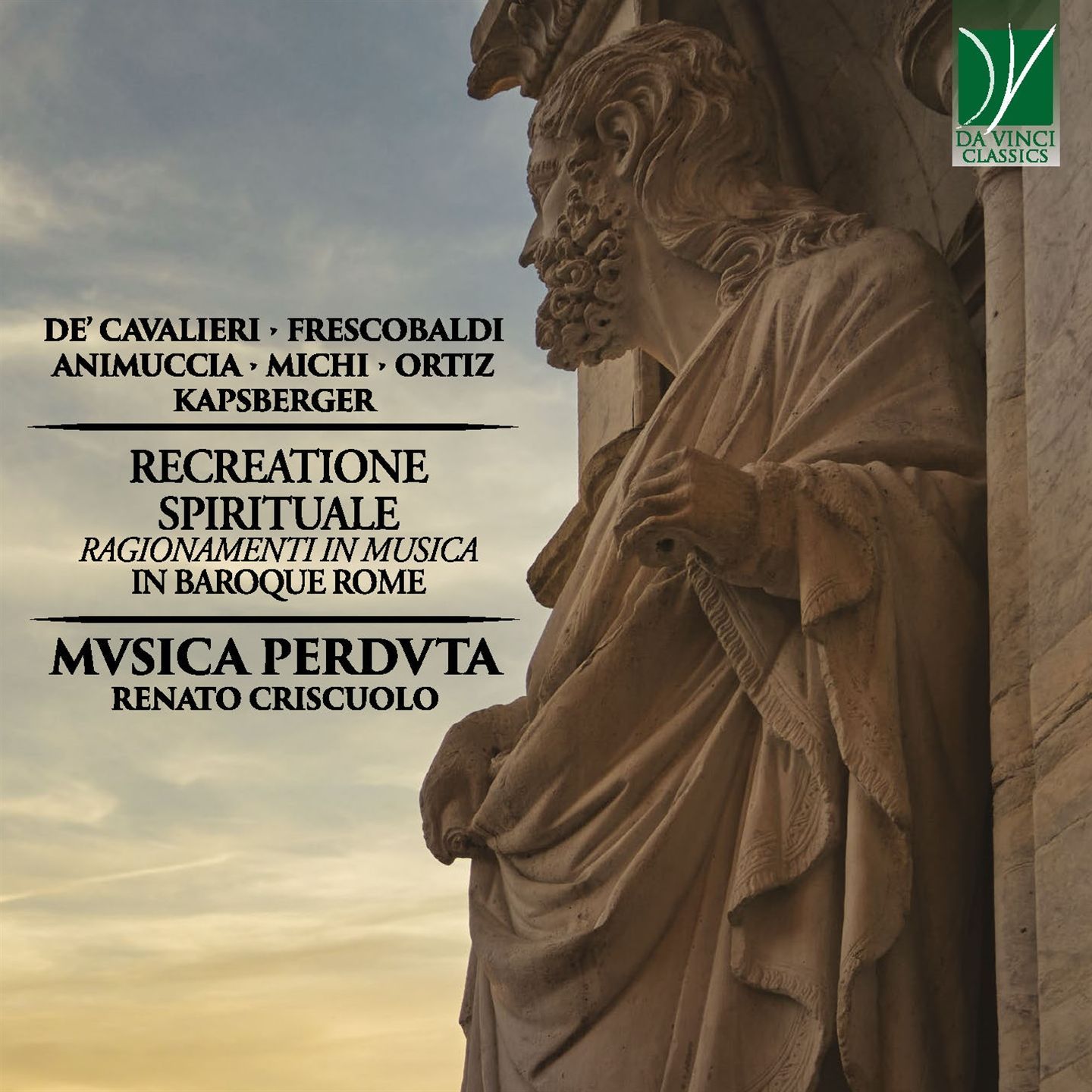

Recreatione Spirituale: Ragionamenti In Musica In Baroque Rome – Mvsica Perdvta
Mvsica Perdvta
15,90€
Only logged in customers who have purchased this product may leave a review.
Reviews
There are no reviews yet.