



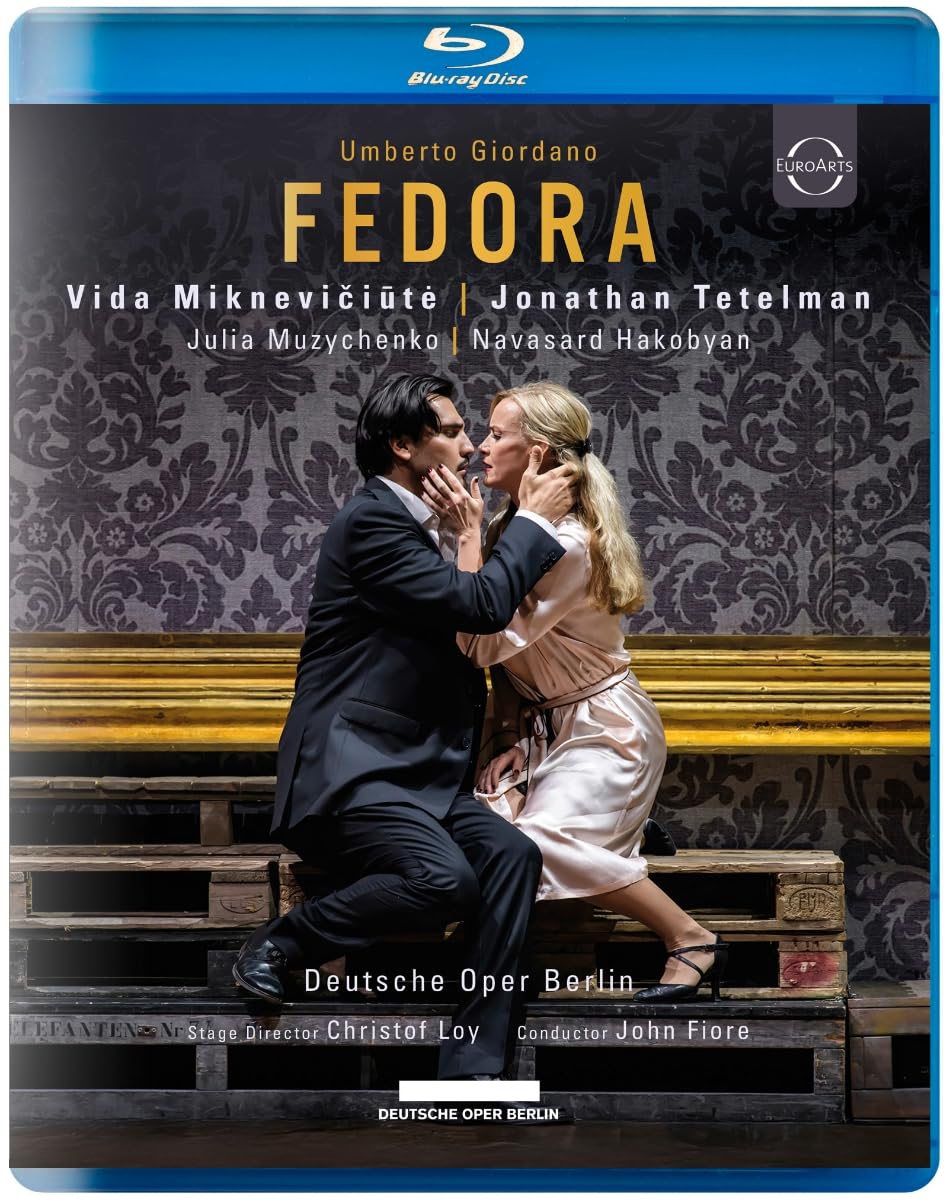
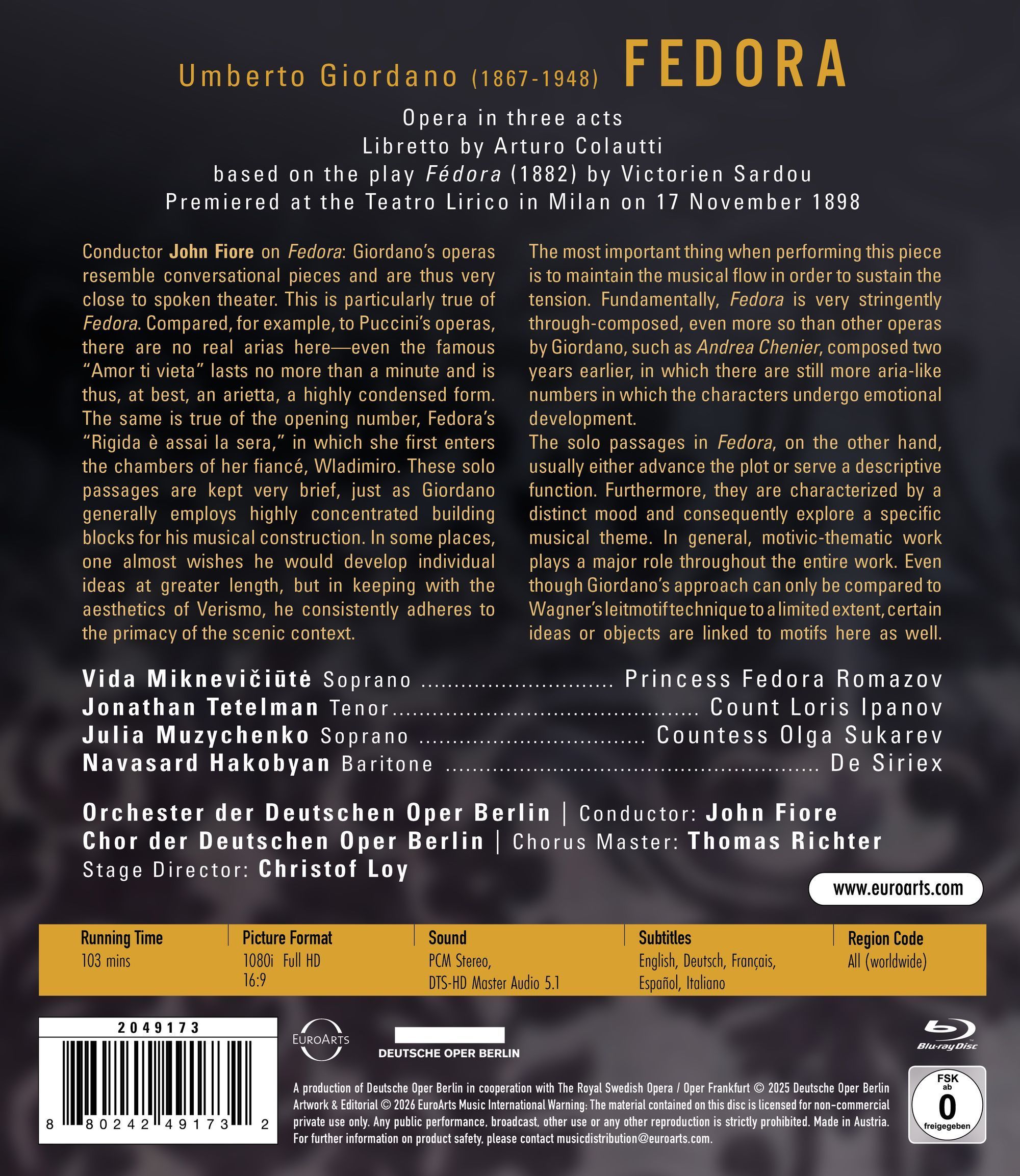

Conductor John Fiore on Fedora: Giordano’s operas resemble conversational pieces and are thus very close to spoken theater. This is particularly true of Fedora. Compared, for example, to Puccini’s operas, there are no real arias here—even the famous “Amor ti vieta” lasts no more than a minute and is thus, at best, an arietta, a highly condensed form. The same is true of the opening number, Fedora’s “Rigida è assai la sera,” in which she first enters the chambers of her fiancé, Wladimiro. These solo passages are kept very brief, just as Giordano generally employs highly concentrated building blocks for his musical construction. In some places, one almost wishes he would develop individual ideas at greater length, but in keeping with the aesthetics of Verismo, he consistently adheres to the primacy of the scenic context.
The most important thing when performing this piece is to maintain the musical flow in order to sustain the tension. Fundamentally, Fedora is very stringently through-composed, even more so than other operas by Giordano, such as Andrea Chénier, composed two years earlier, in which there are still more aria-like numbers in which the characters undergo emotional development.
The solo passages in Fedora, on the other hand, usually either advance the plot or serve a descriptive function. Furthermore, they are characterized by a distinct mood and consequently explore a specific musical theme. In general, motivic-thematic work plays a major role throughout the entire work. Even though Giordano’s approach can only be compared to Wagner’s leitmotif technique to a limited extent, certain ideas or objects are linked to motifs here as well.
Avis
Il n’y a pas encore d’avis.