





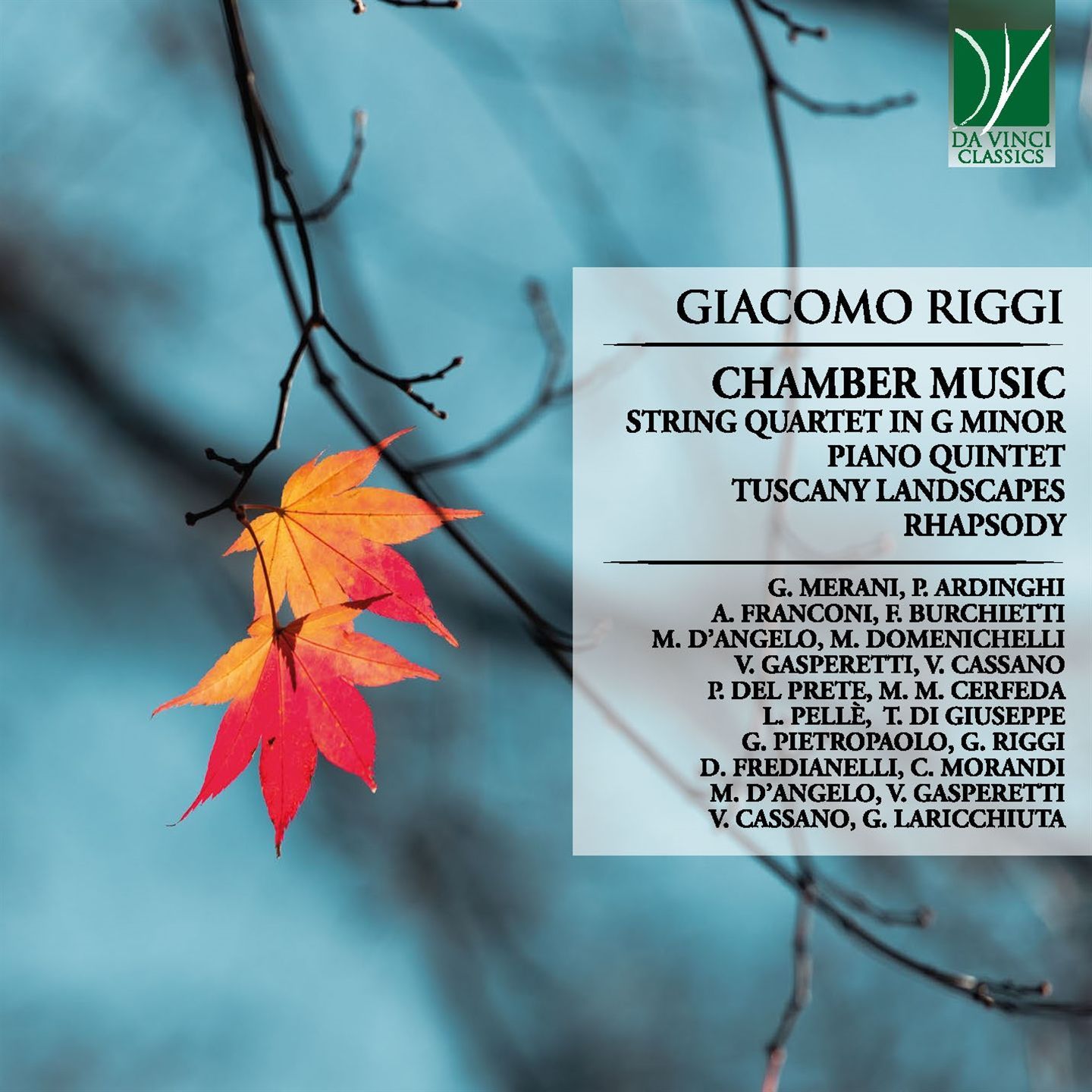
Giacomo Riggi: He was Born in Barga (LU) on November 1983, Giacomo begins his musical studies at the age of 11 and graduated in classical percussions with full marks and honour at the high musical education Institute P.Mascagni in Livorno under Gionata Faralli’s guidance.
Musician, songwriter and composer, Giacomo wins the following competitions: “We love Jazz and Gospel” in Genova (1999), “Cesare Chiti” announced by P.Mascagni Institue in Livorno (2000), First prize as Solo Percussion “Città di Fusignano” (2002), First prize “Città di Cento” (2003), chamber music competition of “Venaria Reale” (2005), First prize “Moncalieri Jazz” with the band “Sestetto formica” (2005), First prize for the 3d edition of “Waltez jazz competition” with his own project “Isevarm” (2009), Prize “Radio stop” and “premio della critica” at the international pop music competition “golden disc”, “The prize “rotary” issued by the rotary club Livorno (2011).
He performs with the following orchestras: Orchestra sinfonica di SanRemo, O.R.T. Orchestra Regionale Toscana, O.J.M Orchestre des jeunes de la Mediterraneè, O.G.I. Orchestra Giovanile italiana, Arts academy of rome, Maggio musicale fiorentino, filarmonica Arturo toscanini parma.
He toured in Italy and abroad: Lithuania – Estonia – Finland – Romania – France – Spain – Germany – England – Russia – China- Japan – Taiwan – Bulgaria – United States – Colombia – Mexico etc..
He recorded 3 albums as leader: “isevarm” – with Simone Graziano; string quartet “even8”. Featuring Luciano Biondini and paul mccandless (2010), “linea s” (2015), “into my life” (2016) and cooperated as side-ma in several album such as: “Vox Aquae” with flutist Stefano Agostini, Giovanni Canale e Francesco di Francescantonio (1998), “Now here nowhere” with guitarist Simone Ricci and Johannes Faber on trumpet (1999), “Keep Swinging” with the trio Inside Out (2008), “One changes bass” of Fabio di Tanno, a live album with the “Contempoart ensemble of Prato” in the performance of “Don Perlimplin” by Bruno Maderna and “Serenata per un satellite” (2003) and many others.
As composers, he wrote also, “Fantasia per violoncello e piano” performed in the festival six “Concerti della Domenica” of Mascagni Institute, “Il fagiolo magico” opera for children freely inspired by the homonymous tale staged in April 2009 at the Teatro Goldoni of Livorno and performed at Teatro Verdi (Florence) in March 2018, “La Regina delle nevi” opera for children freely inspired by the homonymous tale staged in March 2019 at Teatro Verdi (Florence).
Riggi collaborated with Cirque du Soleil as Pianist/Bandleader at the creation and first leg of the tour in the show “Axel”
Today, contemporary music enjoys a special status: a wavering fame is juxtaposed to a continuingly nuanced reception.
This starts from its very definition, since justifying for human beings what is contemporary (i.e. “of the present day”, “of the now”, “of the hic et nunc”) is an instinctive tendency both for our species and for many others in the animal realm.
When contemporary music is concerned, however, the matter gets complicated in comparison, for example, to a painting which clearly cannot enjoy an aural mobility.
The simple justification of something as being “an output of the present day” loses its meaning almost entirely.
Music itself, in fact, became shattered in innumerable spaces, avantgardes, fortresses and free rivers, and each of them has an identity of its own (or is in quest for it, as happens since the times of Alfredo Casella).
It is also extremely complex, for composers, to define and create a poetics of their own, supporting them and making them recognizable in the aural mare magnum accompanying our existence; moreover, it is complex for this output to reach the highest possible number of people who are (or may be) the ultimate receivers of their work.
This led, from the one side, to an extreme attempt to disconnect oneself from the past, with the risk of sterility and utopia; from the other, to the plundering of styles and “modes” attributable to a past whose range varies depending on the composer.
With increasing frequency, one glimpses a mixture of these two tendencies.
In its novelty, it is nothing else than the recovery of a balance which partly got broken in the first years of the twentieth century. It gives back to the artistic and musical dimension the crossroads of “past/evolution”.

Seuls les clients connectés ayant acheté ce produit ont la possibilité de laisser un avis.
Avis
Il n’y a pas encore d’avis.