





In the nineteenth century, the figure of Beethoven loomed large in the world of instrumental music. His Symphonies, piano Sonatas, string Quartets and his other chamber music works had pushed to the extreme the potential of the Sonata form and demonstrated virtually all of its possibilities. All of the younger composers needed time and efforts in order to find their own voice after the cult of Beethoven had become the paradigm of music, or rather of art itself in the view of the Idealists and Romantics. In spite of the difficulties experienced by virtually all the major artists of the Romantic generation in their exploration of the Sonata form, undeniably some of the most successful composers in this genre belonged in the geographical and cultural area of Beethoven’s Germany and Austria; thus, unavoidably, form and content started to identify with each other, and the “German” instrumental idiom established itself as the language of Romantic instrumental music.
The Latin, Scandinavian and Eastern countries found themselves at the periphery of the extraordinary flowering of German and Austrian chamber music; and this in spite of an exceptional blossoming of local talents, and of an overflowing heritage of popular tunes, idiomatic harmonies, ornamentation styles and idiosyncratic rhythms. Of course, many countries managed to develop a genuinely local musical culture, especially in the field of vocal music and opera; but those who wished to write works in the Sonata forms had inevitably to take a stance with respect to the German model.
The Sonata form was, of course, no straitjacket; it became increasingly flexible, and demonstrated its ductility and its capability to bend itself to new harmonic solutions and new compositional challenges. It was, however, a highly successful formula, whose solid and robust structure could be personalized through the choice of the actual musical material: and on this plane the possibility of intervening with local features was wide open for a generation of non-German composers.
Doubtlessly, one of the emblematic characters of the “nationalist” musical movement was the Norwegian Edvard Grieg, who claimed pride of place for the musical heritage of his country and disseminated the characterising features of its music while using actual citations rather sparsely. Grieg embodied the struggles of his generation in an unmistakable fashion: he had studied in Leipzig, the very centre of the German musical school, and had purposefully sought to learn the masterly knowledge of form which was being handed down from one generation to another. Later he would be critical of the academic teaching he had received there; however, his teachers actively encouraged him to experiment creatively and to find his own musical language.

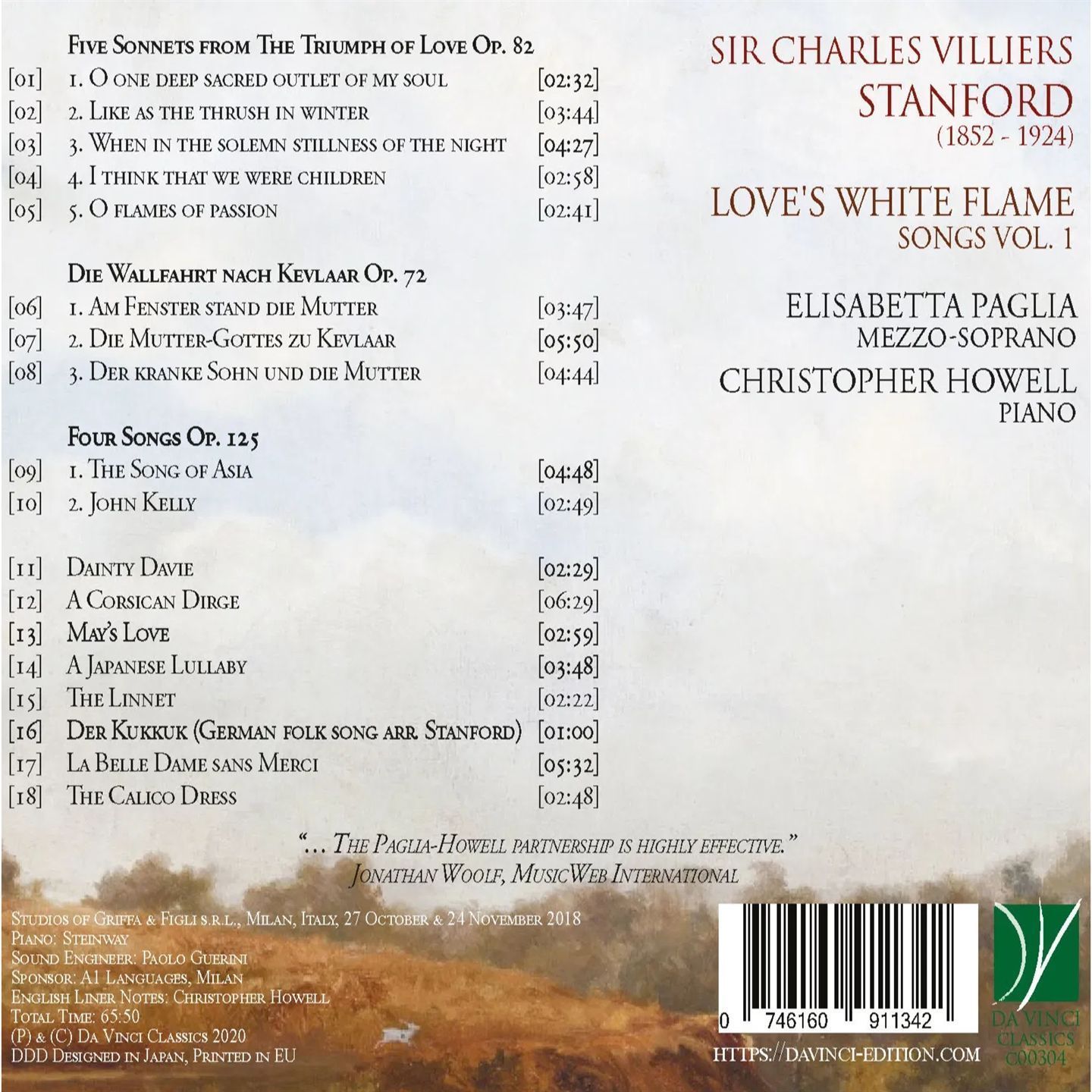
Fauré / Grieg: Violin Sonatas – Paolo Ardinghi
Paolo Ardinghi, Bruno Canino
15,90€
Alleen ingelogde klanten die dit product hebben gekocht, kunnen een beoordeling achterlaten.
Beoordelingen
Er zijn nog geen beoordelingen.